March 7, 1965. Selma, Alabama.
Six hundred people — men, women, ordinary citizens — set out to walk from Selma to Montgomery to demand one thing: the right to vote.
They didn't make it across the Edmund Pettus Bridge.
State troopers and Sheriff Jim Clark's posse met them with clubs, tear gas, and mounted charges. Seventeen marchers were hospitalized. John Lewis — then 25 years old — had his skull fractured.
The cameras were rolling. The nation watched.
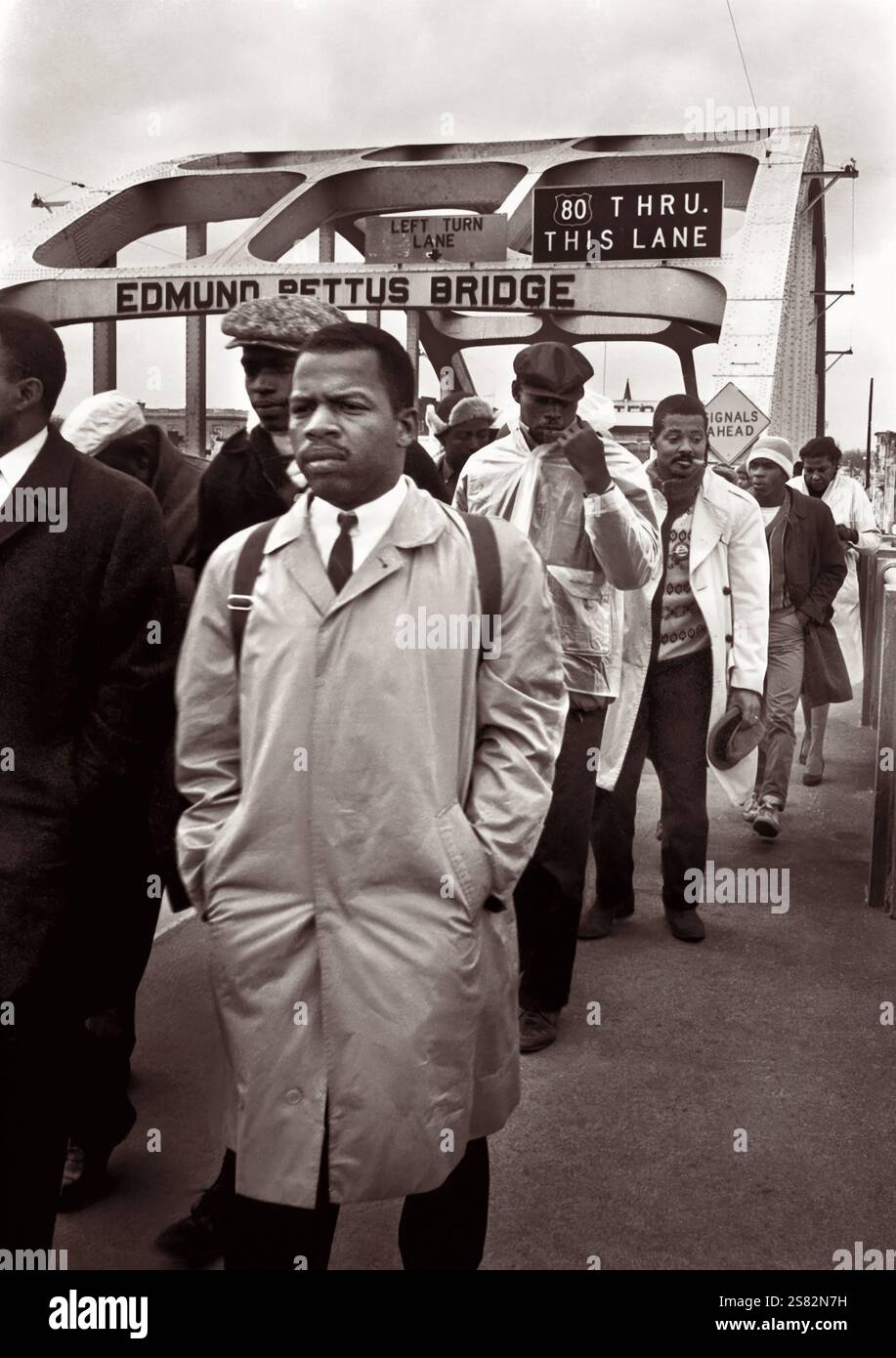
John Lewis leading marchers across the Edmund Pettus Bridge — Bloody Sunday, March 7, 1965
What Selma Was Really About
Selma wasn't just a march. It was a direct confrontation with a system designed to make Black Americans citizens on paper — and non-citizens in practice.
Dallas County, Alabama was majority Black. Yet in 1965:
Only 2% of eligible Black adults were registered to vote.
White officials used literacy tests, poll taxes, arbitrary "interpretation tests," and outright intimidation to block registration.
Sheriff Clark's posse beat, arrested, and terrorized Black residents who tried to register.
Selma forced the country to face a truth it had been avoiding:
"Civil rights legislation without enforcement meant nothing."
The Civil Rights Act of 1964 had outlawed discrimination — but it hadn't dismantled the machinery that kept Black citizens from voting. Selma exposed that gap. On national television.
Eight days after Bloody Sunday, President Johnson addressed Congress:
"Their cause must be our cause too."
The March That Forced a Law
It took three attempts.
March 7 — Bloody Sunday
About 600 marchers were met by state troopers and beaten back on the Edmund Pettus Bridge. The moment shocked the nation and broke the political stalemate.
March 9 — Turnaround Tuesday
Dr. King led a second march. Bound by a federal court order, he stopped at the crest of the bridge, knelt in prayer, and turned back — a strategic move to avoid another massacre while securing federal protection.
March 21–25 — The Successful March
With federal court protection and the National Guard under federal command, more than 3,000 marchers crossed the bridge and walked 54 miles to Montgomery. By the time they reached the capitol, 25,000 people stood with them.
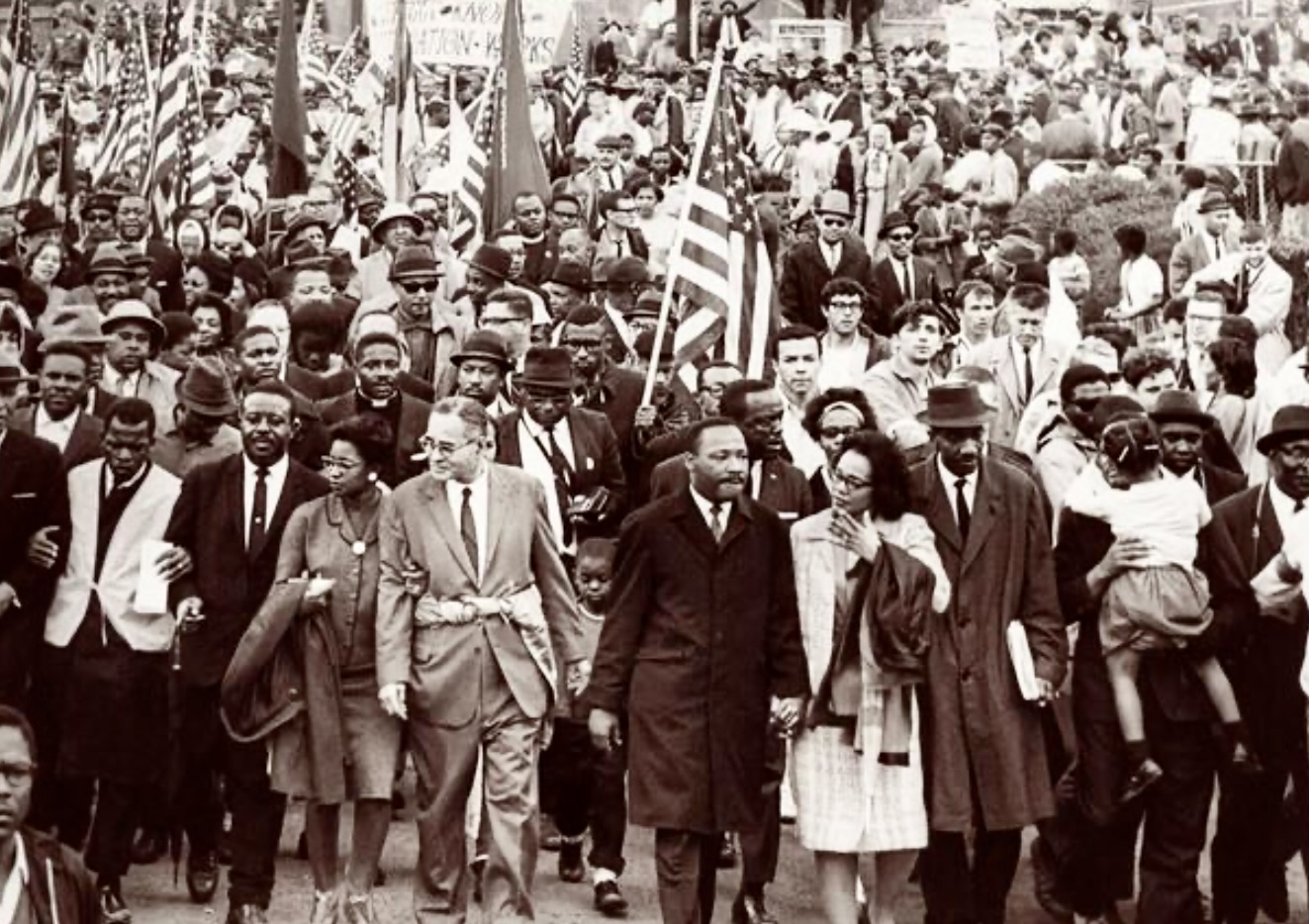
Dr. Martin Luther King Jr. leads marchers, Selma to Montgomery, 1965
Five months later, President Lyndon B. Johnson signed the Voting Rights Act of 1965 into law — with Dr. King watching from behind.
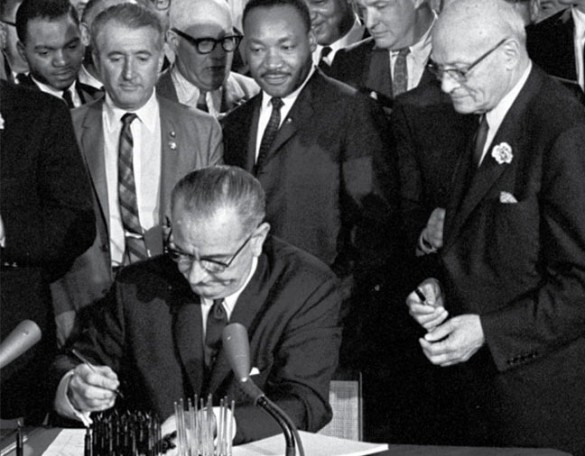
President Lyndon B. Johnson signs the Voting Rights Act, August 6, 1965
It outlawed literacy tests. It authorized federal oversight of elections in discriminatory jurisdictions. It transformed American democracy. Black voter registration in the Deep South skyrocketed within years.
If you strip away the imagery and the mythology, Selma was about citizenship. Power. The state choosing who counts and who doesn't. Ordinary people forcing the federal government to confront its own contradictions.
That Was 60 Years Ago.
Here's What's Happening Right Now.
The machinery is back. The targets have expanded. The playbook hasn't changed.
The SAVE Act —
Stalled in Congress, Alive in the States
Trump declared he won't move on anything else until the SAVE America Act — a voting bill that could disenfranchise millions — is law. So far, it's stalled in the Senate.
But don't be fooled.
In just the past two weeks, four states signed proof-of-citizenship voting laws: Florida, Mississippi, South Dakota, and Utah. Twelve more states have bills moving through their legislatures right now.
Here's what the numbers actually show about the "fraud" they claim to be solving:
Mississippi found 15 non-citizens out of 1.7 million registered voters.
South Dakota had one non-citizen vote — in 2016.
Utah? Not a single non-citizen has ever voted in a Utah election.
This isn't about fraud. It's about power.
"If the SAVE America Act isn't going to pass then I'm going to use every tool at my disposal to try and get states to react to something."
— Catherine Engelbrecht, True the Vote
And blue states aren't immune. New York, Michigan, Rhode Island, and Vermont have all seen proof-of-citizenship legislation proposed. As one Vermont voting rights advocate warned: "That doesn't mean that the seeds aren't there — even here in Vermont."
New Hampshire:
They're Coming for Student Voters
Governor Kelly Ayotte just signed a law eliminating student IDs — even government-issued ones — as valid identification for voting. It takes effect in June.
This isn't an accident. College students in New Hampshire are a critical part of the electorate. And last year, under the state's new documentation requirements, hundreds of voters were already turned away at the polls.
"The Trump administration has openly stated its desire to ensure only 'the right people' vote. Laws like this one are how that goal is pursued at the state level."
— Lisa Kovack, NH Campaign for Voting Rights
New Hampshire also eliminated affidavit voting — the safety net that allowed eligible voters without ID to sign a sworn statement and cast a ballot. No ID. No vote. No second chances.
Riverside County, CA:
They're Coming for Your Ballots
Last February, Riverside County Sheriff Chad Bianco — a Republican running for governor of California — seized 650,000 ballots from a redistricting referendum. His justification? Claims from a local right-wing activist group of a 45,000-vote discrepancy.
The warrants were sealed. A compliant local judge — who had publicly endorsed Bianco — signed them.
When the warrants were finally unsealed this week, here's what they revealed: the warrants checked the box for probable cause of a felony — but never identified a crime, never named a suspect.
The actual discrepancy? 103 votes. Out of 650,000.
That's roughly 0.016% — the result of volunteers misreading raw, unprocessed data.
"That's why some people should never be allowed to vote."
— Sheriff Chad Bianco, social media post
This is the post-election playbook. And it's already been rehearsed.
"Who Will Save Us?
We Will Save Us."
Last winter, in the dead of a Minnesota winter, paramilitary ICE agents terrorized communities for months — killing two American citizens.
People took to the streets. They organized. They showed up for each other.
And over and over again, a rallying cry rang out:
"Who will save us? We will save us."
That is the spirit of Selma. That is the answer to every literacy test, every seized ballot, every law designed to make your vote disappear.
The Bottom Line
Let's call this what it is.
Trump and his administration — in coordination with complicit governors, attorneys general, and secretaries of state — see what's coming in 2026.
They are doing whatever it takes to suppress every voter they view as a threat to their hold on power.
"Voter fraud" is not their concern. Power is. And we are the obstacle.
They haven't changed the playbook since Selma.
Neither have we.
Take Action Now
The fight for your vote is happening right now — at the state level, in your county, at your polling place. Here's how to stand with us.
📋 Sign the Petition
The SAVE Act would strip millions of Americans — including an estimated 69 million women — of their right to vote. Add your name.
SIGN THE PETITION →📱 Stay Connected
Get action alerts, program announcements, and updates directly from Momentum Rising.
SIGN UP →❤️ Support the Work
Project Sentinel, coalition building, voter protection — everything we're building runs on your support.
DONATE →